The one diabetes supply you hope not to need and must never be without. Measured, portable, shelf-stable — this is the low-blood-sugar kit, done properly.

The bedside and kitchen-drawer bottle: 50 fast-acting glucose tablets at 4 grams each, so a standard 15-gram treatment is a counted four tablets, not a guess.
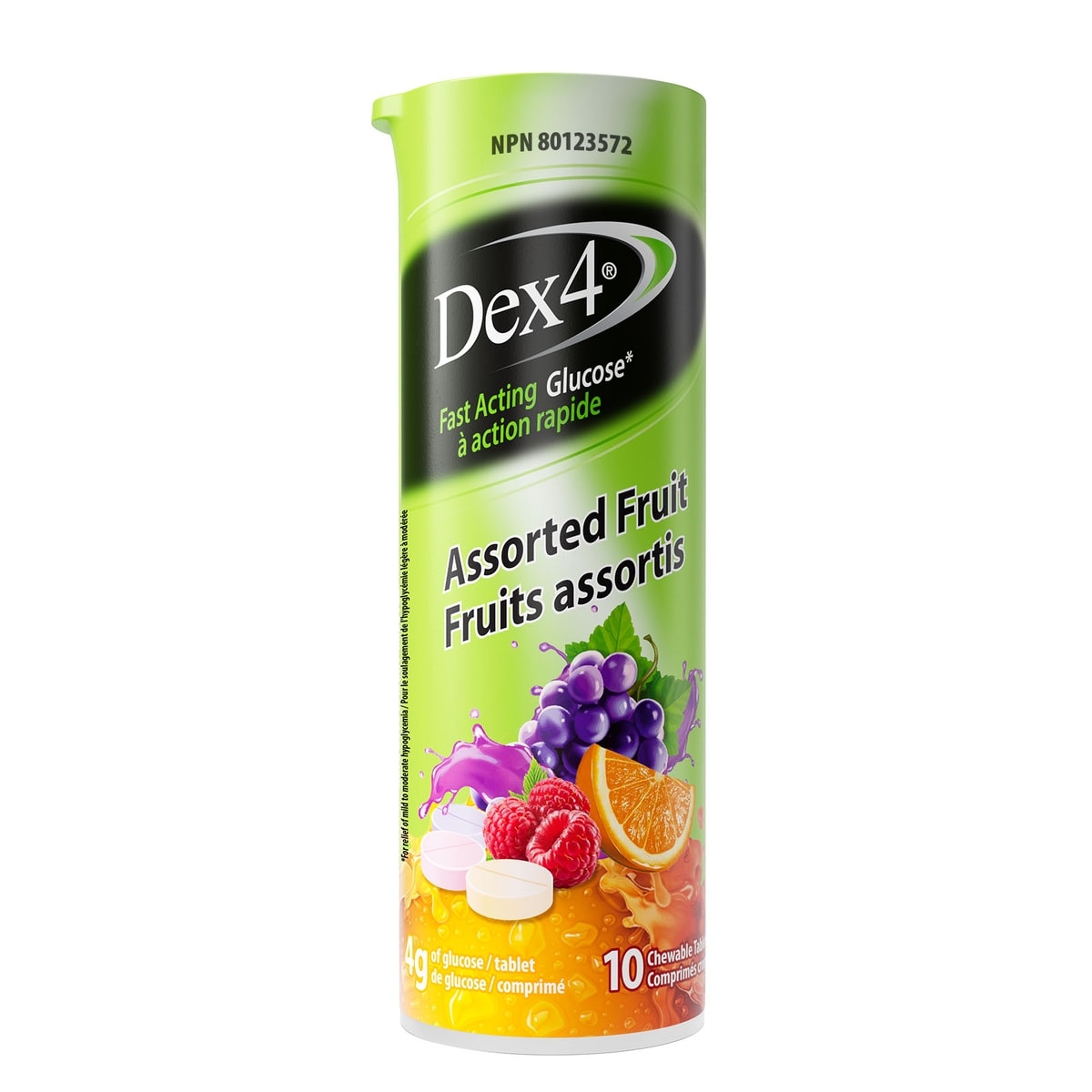
A pocket-size tube of 10 tablets for the car, coat, gym bag and desk — the places lows actually happen. Refill it from the big bottle.
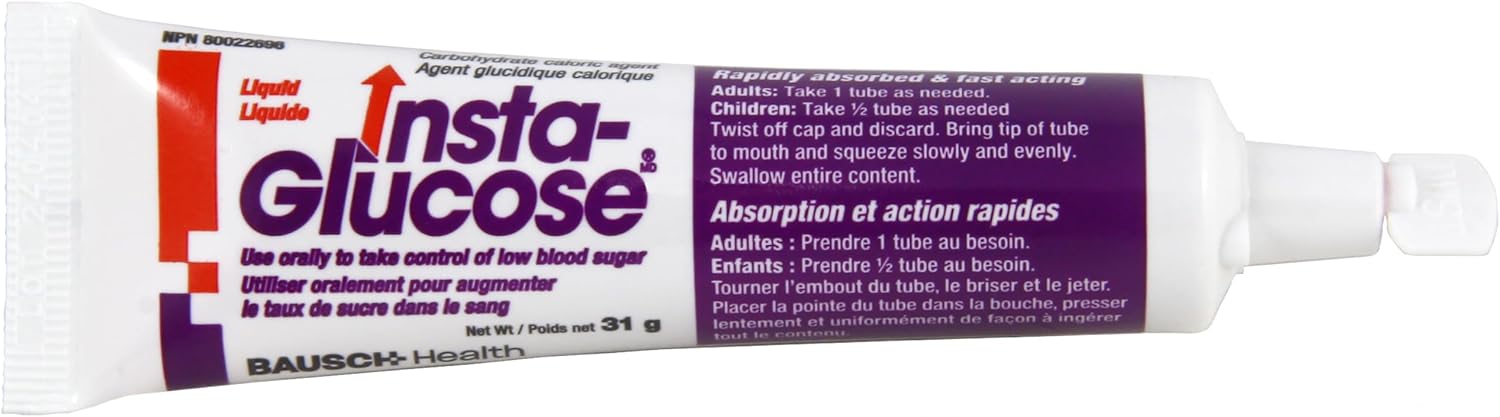
A measured liquid glucose gel for moments when chewing is the last thing you want to do — a common pick for nightstands and for people who dislike tablets.

Same measured 4-gram tablets in tropical fruit — because the best flavour is the one you will actually carry and take without hesitating.
When blood sugar drops, the treatment is fast-acting carbohydrate — and the dose matters. Too little and the low drags on; juice boxes, candy and guesswork make the dose a lottery, and foods with fat in them (chocolate is the classic mistake) absorb slowly exactly when slow is the problem. Glucose tablets and gels exist to remove the guesswork: pure glucose, pre-measured, absorbed as fast as anything you can swallow, in a package that lives in a pocket for months without spoiling or spilling.
Diabetes Canada and the American Diabetes Association publish the same widely used approach, often called the 15-15 rule: take 15 grams of fast-acting carbohydrate, wait 15 minutes, check again, and repeat if you are still below range; once you are back in range, a small snack with carbohydrate and protein is commonly advised if your next meal is more than an hour away. Your own care plan comes first — targets and treatments are personal, and if your team has given you different numbers, theirs are the ones to follow. The point for this page is narrower: whatever your number is, measured tablets make hitting it easy. Dex4 tablets are 4 grams each, so 15 grams is four tablets — counted, not estimated.
| Form | Strengths | Watch for | Best place |
|---|---|---|---|
| Tablets, bottle of 50 | Cheapest per gram, long shelf life, exact counting | Bulky for a pocket | Bedside, kitchen, desk |
| Tablets, travel tube of 10 | Pocket-size, crush-proof tube, refillable | Only ~40 g per tube — refill it | Coat, car, gym bag |
| Glucose gel | No chewing, pre-measured pouch | Costs more per gram; check the grams per pouch | Nightstand, anyone who dislikes tablets |
| Juice / regular soda | Everywhere, familiar | Portions vary, spills, needs refrigeration once open | Backup, not the plan |
One boundary worth stating plainly: frequent lows are information for your care team, not a problem tablets solve. If you are treating lows often, that pattern — not the supply shelf — is what to raise at your next appointment.
The widely published guidance — the 15-15 rule — is 15 grams of fast-acting carbohydrate, wait 15 minutes, recheck, and repeat if still low. Dex4 tablets contain 4 grams of glucose each, so four tablets make a 16-gram treatment. Your own care plan overrides any general rule: if your care team has set a different amount or target for you, follow theirs.
For treating a low, they have three practical advantages: the dose is measured rather than guessed, they contain no fat to slow absorption (which is why chocolate is a poor choice), and they keep for months in a pocket, car or drawer without spoiling or spilling. Juice works too — tablets are simply the most controlled way to do it.
Yes. Tablets and gels carry expiry dates and lose reliability past them, and heat — a summer glove box — ages them faster. Check dates when you restock, rotate the oldest supply to the station you use most, and replace the car supply on a schedule rather than waiting to discover it is stale during a low.
In the places lows actually find you: bedside, kitchen, car, and the coat or bag you carry daily — plus at work if you spend your days there. Keep travel tubes in your carry-on when flying, never only in checked luggage. The rule is simple: a treatment you cannot reach in a minute is not a treatment.