The pen-style device that holds the lancet and controls the prick. Adjustable depth settings let you find the shallowest setting that still gives a good drop.
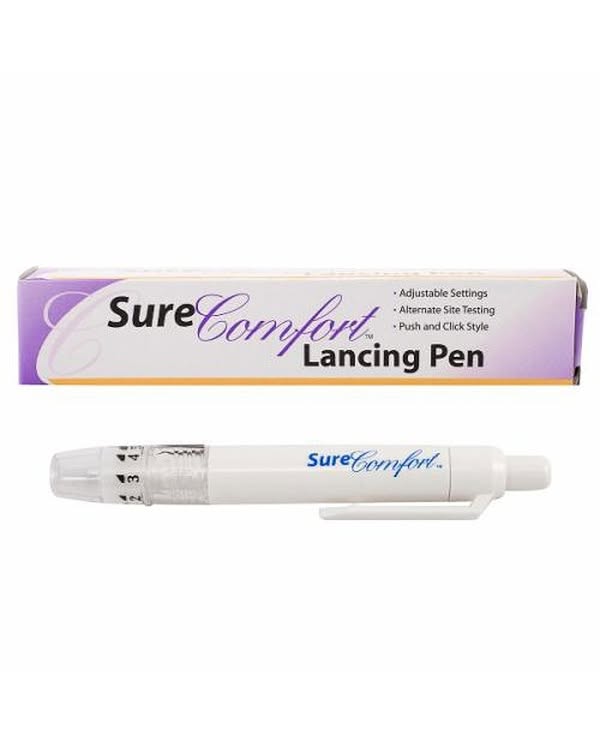
A straightforward adjustable lancing pen that works with standard lancets. A low-cost way to replace a worn-out device.
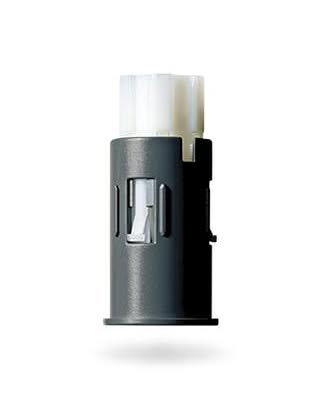
Uses preloaded 6-lancet drums — advance to a fresh lancet with a click, never touch a used one. Often bundled with the Accu-Chek Guide meter.

Designed for the fine 33G Delica Plus lancets, with multiple depth settings for a gentler sampling experience.
The lancing device is the part of testing you feel. A spring-loaded pen that fires the lancet to a set depth, the same way every time, it turns a sharp jab into a quick, consistent tap. Getting the device and its settings right is most of what people mean by "painless testing."
The numbered dial sets how deep the lancet goes. Start low — 1 or 2 — and increase one step at a time until you get a round drop of blood with gentle pressure. The shallowest setting that works reliably is your setting: less depth means less pain and faster-healing fingers. Skin thickness varies by finger and by season, so expect to adjust now and then.
This rule has no exceptions: even with a brand-new lancet, a lancing device must be used by one person only. Blood can remain on the device and its end cap, and health authorities have traced hepatitis B outbreaks in care settings to shared fingerstick devices. A basic pen costs little — one per person, always.
Start at the shallowest setting and work up one step at a time until a round drop of blood forms with gentle pressure. That lowest reliable setting is yours. Expect it to differ between fingers and to need a small increase in cold weather, when blood flow to the fingertips slows.
No — never share a lancing device, even with a fresh lancet. Traces of blood can remain on the device and end cap, and shared fingerstick devices have been linked to hepatitis B transmission in care settings. Each person who tests needs their own device; basic models are inexpensive.
The usual causes are a depth setting that is too shallow for that finger, cold hands, an old lancet that has dulled, or the device not being pressed firmly against the skin. Warm your hands, hang your arm down briefly, fit a fresh lancet, and increase the depth one step before squeezing harder.
Eventually, yes. The internal spring weakens after years of daily use, and the prick becomes inconsistent or too shallow. If a device stops cocking smoothly or firing crisply, replace it — they are among the least expensive parts of a testing kit.